


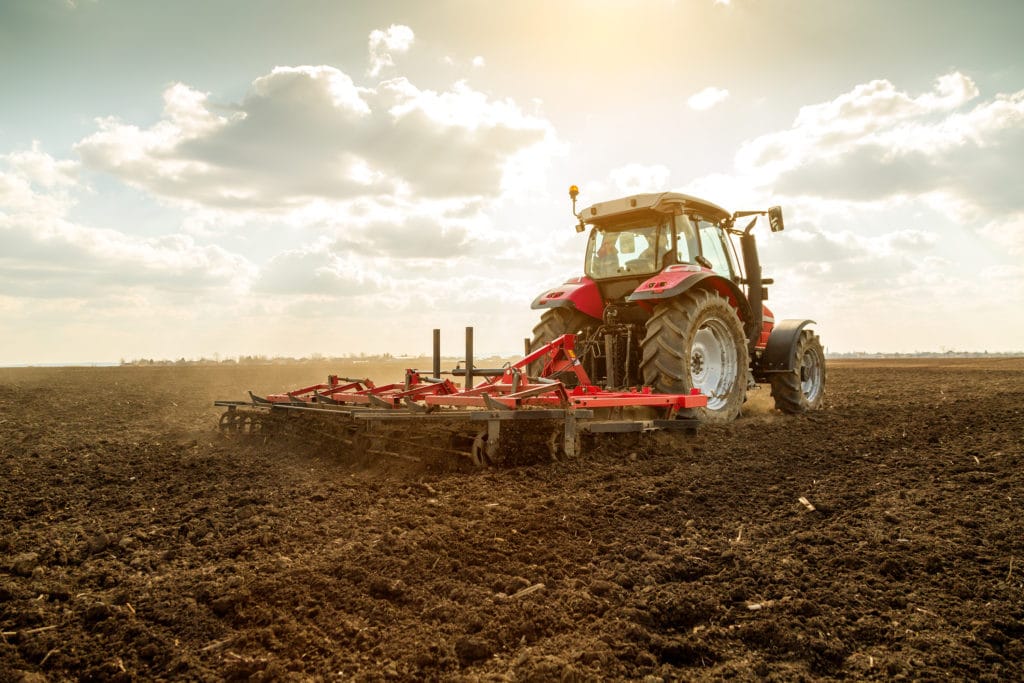
Increase corn yield
Should You Replant Corn? A Stand-Count Decision Framework (and Why Replanting Won’t Fix a Bird Problem)
The stand came up short and now you’re standing at the edge of the field doing math in your head: tear it up and replant, or keep what you’ve got and hope it fills the gap. It’s an expensive decision either way, and the clock is running.
Here’s the honest answer: replant only when the replanted crop’s realistic yield potential clearly beats keeping the existing stand — after you’ve counted the stand accurately, priced in the late-planting penalty, and identified what caused the loss in the first place. That last step is the one growers skip, and it’s the one that turns a replant into a second failure. Because if birds thinned your first stand, replanting just serves them a second meal. This guide walks the decision the way extension agronomists do, step by step.
Step 1: Count the stand — don’t eyeball it
Every replant decision starts with a real number, not a gut feeling. Use the 1/1,000th-of-an-acre stand count: measure a length of row, count the healthy plants, multiply by 1,000.
| Row spacing | Length = 1/1,000th acre |
|---|---|
| 30 inch | 17 ft 5 in |
| 20 inch | 26 ft 2 in |
| 15 inch | 34 ft 10 in |
Stand count
Count several representative spots, average them, and multiply by 1,000 to get plants per acre. Sample honestly — don’t cherry-pick the worst corner or the best one — but do note separately how the edges and wet corners look, because where the loss concentrates is a clue you’ll need in Step 4.
Modern corn is more forgiving of a reduced stand than growers often assume. A stand that looks disappointing can still carry most of its yield potential, which is exactly why you count before you commit.
Step 2: Read the gaps, not just the count
Two fields can have the same plants-per-acre and very different yield potential, because how the loss is distributed matters. Extension research puts rough numbers on it:
- Gaps of 4–6 feet within a row: about 5% yield loss.
- Gaps of 1–3 feet: about 2% yield loss.
These penalties stack on top of the raw population loss. A field that’s short on population and full of long within-row gaps is a stronger replant candidate than one that’s evenly thin, because corn compensates well for uniform spacing and poorly for big holes.
Step 3: Do the calendar math — this is where replant plans die
Here’s the trap in replanting: the day you’d replant is never the day you planted the first time. You’re trading a thin early stand for a full late stand, and late corn yields less. Extension yield-potential tables make the tradeoff concrete. Using a representative Corn-Belt example:
| Scenario | Final stand | Approx. yield potential |
|---|---|---|
| Original planting (late April), full stand | 30,000 | ~100% |
| Original planting (late April), thin stand | 17,500 | ~87% |
| Replant ~a month later (late May), full stand | 30,000 | ~81% |
| Replant into early June, full stand | 30,000 | ~68% |
(Illustrative figures from extension replant charts; your local numbers depend on region, hybrid, and maturity — check your state’s extension chart.)
Look at what that table is telling you. A thin stand of 17,500 on the original date still out-yields a perfect replant a month later (~87% vs ~81%). The late-planting penalty is often steeper than the stand loss you’re trying to fix. That’s why the extension rule of thumb is:
- Emergence delay under 2 weeks: replanting usually adds 5% or less — rarely economical.
- Delay of 3+ weeks: replanting can add around 10% — worth a serious look.
The decision isn’t “is this stand bad?” It’s “is the replanted crop’s yield potential enough higher than the existing stand’s to cover the seed, fuel, labor, and lost calendar days?”
Step 4: Compare the money — keep, replant, or prevent
Lay the three paths side by side with real costs for your operation:
| Path | What it costs | What you get |
|---|---|---|
| Keep the stand | Nothing more; you live with the reduced-stand yield potential from Steps 2–3 | The stand you have — often more yield than a late replant |
| Replant | Seed + fuel + labor + tillage + the late-planting yield penalty | A full stand at a later date — only worth it when the yield gain clears all those costs |
| Prevent next year | A few dollars per acre on the input that caused the loss | You don’t have this decision again |
The Penn State replant worksheet formalizes this into eight steps, and it’s worth running on paper: (1) identify the cause and whether it recurs, (2) estimate full-stand yield at the original date, (3) determine the existing stand and distribution, (4) estimate the reduced-stand yield, (5) estimate added cost to keep the stand, (6) estimate replant full-stand yield, (7) estimate replant cost, and (8) compare the value of the reduced stand to the replanted stand. Nine times out of ten the math is closer than it feels standing in the field — which is why running it beats reacting to it. You can put dollars on your own field fast with the corn yield calculator.
The step everyone skips
The step everyone skips — and the one that decides everything
Read step (1) of that worksheet again: identify the cause and whether it recurs if you replant. Extension guidance is blunt about this — the cause of the stand loss must be determined before replanting, or you risk the same incomplete stand a second time, with even lower yield potential because you’re now planting later.
This is where a lot of replants quietly fail. A grower tears up a thin stand, replants into the exact same conditions, and loses it again — because the thing that took the first stand is still there. Cold and crusting pass with the weather. A planter problem is a wrench away. But some causes come back for the replant, and the biggest one hides:
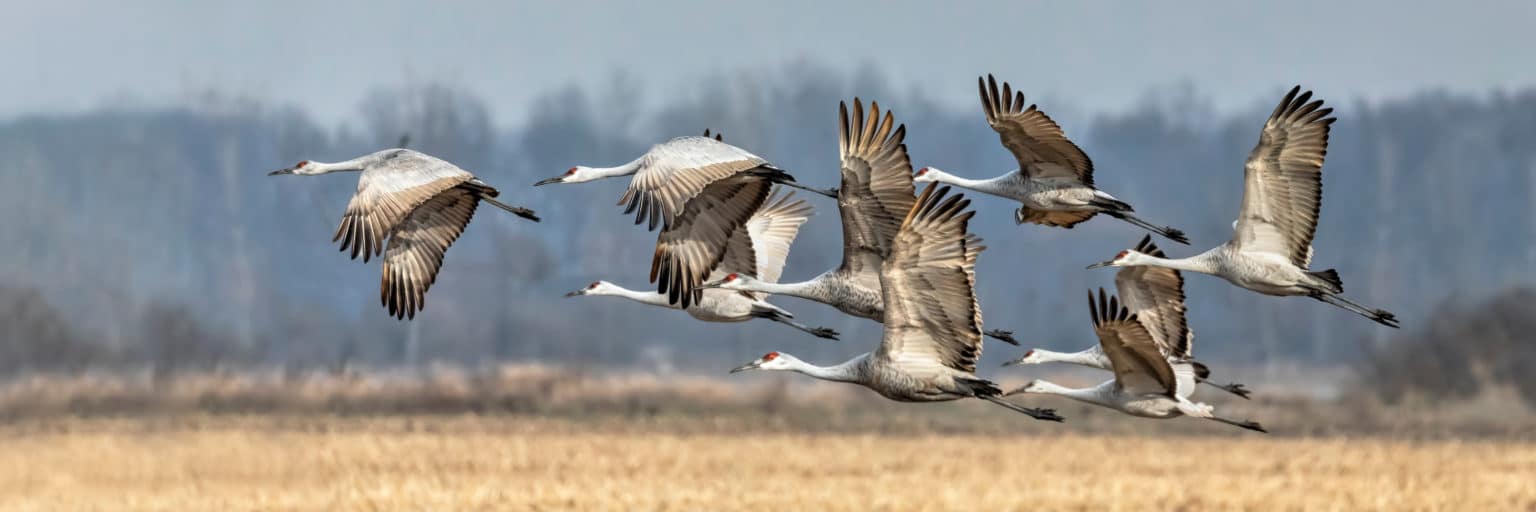
Why replanting won’t fix a bird problem
If birds thinned your first stand — blackbirds, crows, grackles, starlings, or especially sandhill cranes pulling seed out of the row before emergence — then replanting is the worst possible response. You’re putting fresh, untreated seed back into a field the birds have already learned is a food source, right when they’re staging along your edges and wetlands. They’ll work the replant too, and now you’ve paid twice and planted late.
This is easy to miss, because bird damage doesn’t look like bird damage by the time you’re counting stand. The probe holes wash away within a couple of days of a hard rain; the crane damage — a seedling laid down with the root ball gone — looks almost exactly like cutworm. But the scale is real: birds destroy more than a million acres of U.S. corn every year before it emerges, and a single pair of sandhill cranes can pull up to 800 seeds in a day, concentrated right at the field edges where you’ll see your worst stand counts.
The test is simple: dig where a plant is missing. If the kernel is gone entirely — no seed, no sprout — and the gaps cluster at the edges, suspect birds. (The full forensic breakdown, species by species, is on the Bird Damage to Corn Seed guide.) If that’s your diagnosis, the fix isn’t a replant — it’s protecting the seed before it goes in the ground next season.
Prevention
The path that skips the replant decision entirely
The only one of the three paths that gets ahead of the problem is prevention. A bird-repellent seed treatment coats each kernel so a bird that eats one gets immediate but temporary digestive distress, learns your seed isn’t worth the trouble, and moves on — nonlethally, and effectively through emergence. Avipel is the proven option here: an independent 2025 International Crane Foundation study across 2,200+ acres and 57 fields found treated fields carried more than 25% more plants per acre (over 29,000 vs. under 23,000 on untreated fields) and yielded 23.5% more at the highest crane pressure — with treatment the single strongest predictor of final stand in the study’s model.
Run against a replant, the comparison isn’t close. Prevention costs a few dollars an acre and protects the stand you planted, on your original planting date. A replant costs seed, fuel, labor, and a yield penalty — and if birds were the cause, it doesn’t even solve the problem.
Next steps: put a number on your own field with the corn yield calculator, confirm whether birds are your cause with the bird-damage field guide, and see where to buy Avipel before next season’s seed order.
Questions
Frequently asked questions
When is it worth replanting corn?
When the replanted crop’s realistic yield potential clearly beats the existing stand’s after accounting for the late-planting penalty and replant costs. As a rule of thumb, an emergence delay under two weeks rarely pays to replant (5% or less gain), while a 3+ week delay can add around 10% and is worth serious evaluation.
What stand count is too low to keep?
There’s no single magic number — it depends on your original planting date, the replant date, and how the loss is distributed. A thin stand on the original date often out-yields a full replant a month later (roughly 87% vs. 81% of potential in common extension examples). Count the stand, read the gaps, and compare yield potentials rather than reacting to a raw number.
How do I calculate my corn stand count?
Measure 17 ft 5 in of a 30-inch row (26 ft 2 in for 20-inch, 34 ft 10 in for 15-inch), count the healthy plants, and multiply by 1,000 to get plants per acre. Repeat at several spots and average.
Why do agronomists say to find the cause before replanting?
Because some causes recur. If you replant without fixing what took the first stand, you risk losing the second one too — and now you’ve planted later, so the yield ceiling is lower. Determining the cause is step one of every extension replant worksheet.
Will replanting fix bird damage?
No — it usually makes it worse. Birds that learned your field is a food source will work the untreated replant too, and you’ll have paid for seed twice and planted late. The fix for bird-caused stand loss is protecting the seed before planting, not replanting into the same pressure. See the bird-damage guide.
How much does bird-caused stand loss actually cost?
It depends on bird pressure, seeding rate, yield, and corn price — from a few dollars of sunk seed per acre at light pressure to well over $150/acre in lost yield under heavy crane pressure (the 2025 ICF study measured a 23.5% yield gap at the highest crane density). Run the corn yield calculator for your field.
Sources & references
- Penn State Extension — Assessing Corn and Soybean Populations and Replanting Decisions (1/1,000th-acre method; 8-step replant worksheet; yield-potential-by-date table).
- Iowa State University Integrated Crop Management — Stand Assessments – Corn and Corn Replant Checklist (gap-yield penalties; delay-vs-benefit thresholds).
- Ohio State University Agronomic Crops Network — Corn Replant Decisions / Considerations (determine cause before replanting; population-and-date yield potential).
- University of Missouri Extension — Corn and Soybean Replant Decisions (G4091).
- University of Nebraska CropWatch — Timely Field Stand Counts (row-length reference by spacing).
- Avipel / Arkion Life Sciences — product materials and the 2025 International Crane Foundation field study (bird-damage figures, efficacy results). See the Bird Damage to Corn Seed guide for full citations.