
Increase corn yield
Why Is My Corn Stand Thin and Uneven? 8 Causes of Poor Emergence — and the One Most Growers Miss
The planter monitor showed a clean drop, and the seed tag promised strong germination. Three weeks later, the rows tell a different story: gaps where plants should be, and seedlings in the low spots running a leaf behind their neighbors. When the count in the field doesn’t match the count you paid for, something happened between the planter and emergence.
A thin, uneven corn stand almost always traces back to a short list of causes — soil temperature, moisture, crusting, planting depth, seed-to-soil contact, seedling pests, disease, or seed quality. Work through them in order and you can usually find the culprit. But there’s one cause most growers never check, because by the time they count the stand the evidence is already gone: birds pulling planted seed out of the row before it ever emerged. This guide walks all of them, in the order worth checking, and shows you how to tell them apart in your own field.
First, though, put a number on the problem — because “thin” is a feeling until you count it.
- Stand count
- 1. Cold soil
- 2. Crusting
- 3. Depth
- 4. Seed-to-soil
- 5. Insects
- 6. Disease
- 7. Seed quality
- 8. Birds
- Field diagnostic
- FAQ
Step one
Step one: how thin is “thin”? Run a stand count
Before you diagnose anything, measure what you actually have. A stand count turns “that corner looks rough” into plants per acre you can compare against your seeding rate.
The method extension agronomists use is the 1/1,000th-of-an-acre count. Measure off a length of row, count the healthy plants in it, and multiply by 1,000. The length depends on your row spacing:
| Row spacing | Length = 1/1,000th acre |
|---|---|
| 30 inch | 17 ft 5 in |
| 20 inch | 26 ft 2 in |
| 15 inch | 34 ft 10 in |
Count several representative spots across the field — and, importantly, count a few spots along the edges and near wet corners separately, because that’s where one of our suspects hides. Average them, multiply by 1,000, and compare to your target population. If your monitor said you singulated cleanly at 34,000 and your stand comes in at 26,000 with no obvious planter story, something removed roughly 8,000 plants per acre after the seed went in the ground. That gap is the whole question.
While you count, note the pattern of the gaps — it’s the single best clue to the cause:
- Whole-field, consistent thinning points to the planter, the seed, or the soil.
- Clustered gaps at edges and near wetlands point to birds.
- Late, short plants mixed with normal ones point to uneven soil temperature or depth.
Illustrations, not to scale.
Now walk the eight causes.
1. Cold, wet soil and uneven soil temperature
Corn needs consistent warmth to germinate evenly. When seed-zone soil temperatures drop below the roughly 45–50°F range, the uniformity of germination falls off — some seeds fire, others sit and wait. Variation within a field makes it worse: surface residue, darker versus lighter soil, low wet spots, and differences in planting depth all create pockets of cooler soil, so plants emerge days apart. That staggered emergence is the classic cause of a field where every third plant is a growth stage behind its neighbors.
Tell: plants are present but uneven in height and stage, worst in the cool/wet parts of the field. The seed is there when you dig.
2. Soil crusting after a hard rain
Crusting is one of the most common — and most fixable — causes of a thin stand. It usually happens on tilled, silt-heavy soils that catch a hard rain after planting, then dry fast under sun and wind. The surface sets into a crust the seedling can’t punch through, and you get bare stretches where the plant is right there below the surface, bent over, unable to break out.
Tell: dig in a gap and you find a sprouted seedling stalled or leafed-out under the crust. The seed and sprout are present — they just didn’t make it up.
3. Planting depth too shallow or uneven
Corn planted shallower than about 1.5 inches sits in the zone where surface soils dry out fastest, so germination gets erratic. Uneven depth across a pass — from ground speed, residue, or worn planter parts — puts some seeds into good moisture and strands others in dry dirt, and they emerge on different clocks.
Tell: dig several seeds and check depth. Shallow or wildly inconsistent placement, with some seeds in dry soil, points here.
4. Seed-to-soil contact, down-pressure, and singulation
A planter running too fast, with too little down-pressure or an open seed trench, leaves seed in poor contact with the soil — or in a sidewall-compacted “gauge-wheel” trench that stays wet and tight. Singulation problems (doubles and skips from a worn meter) show up as a repeatable pattern tied to one row unit.
Tell: the problem is consistent — every pass, or every time one specific row unit runs. Planter causes rarely cluster at field edges; they track the machine, not the landscape.
5. Seedling insects
Several early-season pests thin a stand: black cutworm cuts young plants off at or near the soil line, while wireworms, white grubs, and seedcorn maggot attack the seed and below-ground tissue before emergence. Cutworm in particular is the one that gets blamed for damage it didn’t do — and, as we’ll see, the one birds get mistaken for.
Tell: dig at the base of a downed plant. Cutworm leaves a cut or notched stem near the soil line, the kernel still attached, and you can often find the larva in the soil nearby.
6. Seedling disease and herbicide injury
Cool, wet soils that slow germination also give seedling diseases (Pythium, Fusarium, Rhizoctonia) more time to work, rotting seed and young roots before emergence. Herbicide carryover or misapplication can also stunt or kill emerging plants in a pattern that follows the sprayer.
Tell: rotted, discolored seed or roots when you dig; or injury symptoms that follow spray overlaps and application boundaries.
7. Seed quality
Sometimes the seed itself is the story — a lot with a lower cold-germination score will emerge poorly in a stressful spring even when everything else is right.
Tell: poor emergence is uniform across the whole field regardless of soil, depth, or edge — and a warm/cold germination test on the retained lot confirms it.
8. The one most growers never check: birds pulling seed before emergence
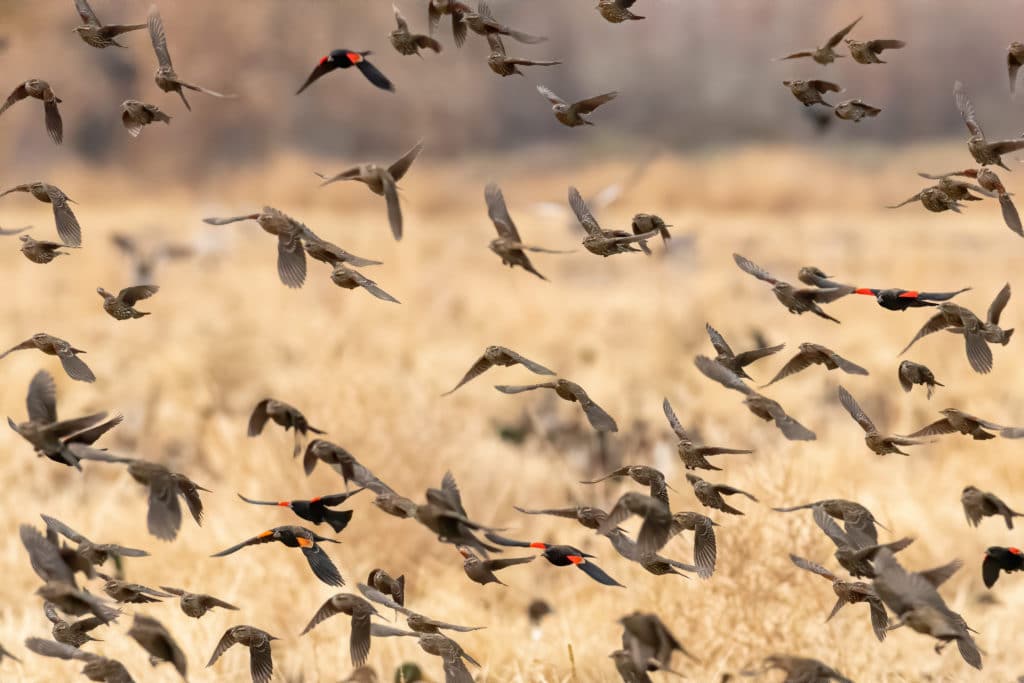
Here’s the cause that hides, because it leaves no green to see and its evidence is fragile. Birds — blackbirds, crows, grackles, starlings, pheasants, turkeys, geese, and especially sandhill cranes — eat planted corn seed and pull young seedlings in the window between planting and emergence, when the kernel is the only food in an otherwise bare field. By the time you count a thin stand weeks later, the bird is long gone, and a single hard spring rain can smooth over the probe holes within 48 hours.
The scale is bigger than most growers realize. Birds are documented destroying more than a million acres of field and sweet corn across the U.S. every year, before the crop emerges, and a single pair of sandhill cranes can pull up to 800 corn seeds in a day. The damage concentrates exactly where you’d expect birds to stage — field edges near tree lines, fencerows, grass waterways, and wet corners — which is why a gappy edge over a clean field center is such a strong signal.

Tell: dig where a plant should be and there’s nothing — no kernel, no sprout. The seed was physically removed. You may find small probe holes in a line along the row, partial kernel fragments, or young plants laid down with the root ball and kernel gone. That last one looks almost exactly like cutworm — which is why bird damage so often gets misdiagnosed.
This is the cause the other seven can’t explain. If your planter checked out, your seed tested fine, the soil was warm and uncrusted, and you still came up short — especially along the edges — it’s time to look at birds. We cover the full forensic breakdown, the species, the cost per acre, and the fix on the Bird Damage to Corn Seed pillar guide.
Field diagnostic
How to tell them apart: the field diagnostic
The fastest way to narrow it down is to dig at a gap and answer one question: is the seed still there?
What you find when you dig
| What you find when you dig | Most likely cause |
|---|---|
| Sprouted seedling stalled under a hard surface layer | Soil crusting |
| Seed present, ungerminated, in cold/wet or shallow soil | Cold soil / shallow depth / poor seed-to-soil contact |
| Rotted, discolored seed or roots | Seedling disease |
| Plant cut at the soil line, kernel still attached, larva nearby | Cutworm / seedling insect |
| Seed gone entirely — no kernel, no sprout, probe holes in a line, worst at edges | Birds |
| Nothing wrong at the seed, but doubles/skips repeat by row unit | Planter / singulation |
The bird-versus-cutworm mix-up is the expensive one, because both can leave a seedling laid down in the row. The difference is at the base: cutworm cuts the stem and leaves the kernel; a bird takes the kernel and the root end. Find a notched stem and a larva, suspect cutworm. Find a missing seed and probe holes, suspect birds.
Next steps
What to do once you know the cause
Most of these causes are next-year planter and management adjustments — slow down, add down-pressure, fix depth, wait for warmer soil, pick a stronger seed lot, rotate chemistry. Worth doing, all of them.
But if the answer is birds, the fix is different, because scaring birds off a field doesn’t work for long — they habituate fast, and nothing you do above ground protects the kernel sitting an inch down in the row. The proven approach is to protect the seed itself: a bird-repellent seed treatment coats each kernel so a bird that eats one gets immediate but temporary digestive distress, learns your seed isn’t worth the trouble, and moves on — nonlethally, and effectively through emergence. That’s exactly what Avipel is built for, and it’s backed by an independent 2025 International Crane Foundation field study across 2,200+ acres that found treated fields carried more than 25% more plants per acre and yielded 23.5% more at the highest crane pressure.
Not sure it’s worth it on your ground? Put a real number on the loss first — the corn yield calculator turns “a few bad corners” into dollars per acre using your own field.
Questions
Frequently asked questions
Why is my corn stand thin even though my planter checked out fine?
If singulation and depth were good and the stand still came in well under your seed drop — especially along field edges and near wetlands — the plants may have been removed after planting. Dig in the gaps: if the kernel is gone entirely, suspect birds rather than the planter or seed.
How do I tell bird damage from cutworm?
Both leave a seedling laid down in the row. Dig at the base: cutworm cuts or notches the stem near the soil line and leaves the kernel; a bird takes the kernel and the root end. A notched stem and a larva mean cutworm; a missing seed and probe holes mean birds.
What causes uneven corn emergence — plants at different heights and stages?
Usually uneven soil temperature, moisture, or planting depth, so seeds germinate on different clocks. Crop residue, dark-versus-light soil, low wet spots, and inconsistent depth all create pockets that emerge days apart.
How do I know if a thin stand is bad enough to matter?
Run a stand count (17 ft 5 in of 30-inch row × 1,000 = plants per acre), compare to your target population, and note the gap pattern. Several 4–6 foot gaps within rows can cost around 5% of yield on their own, on top of the raw population loss.
Do birds really cause enough damage to explain a thin stand?
Yes — birds destroy more than a million acres of U.S. corn a year before emergence, and a single pair of sandhill cranes can pull up to 800 seeds a day. Because the damage clusters at edges and the evidence washes away fast, it’s chronically under-diagnosed. See the full bird-damage guide for the complete breakdown.
How do I stop birds from thinning my stand next year?
Protect the seed before planting with a registered bird-repellent seed treatment. Avipel coats each kernel so birds get temporary digestive distress and leave the seed alone — nonlethal, and effective through emergence.
Sources & references
- Iowa State University Integrated Crop Management — Stand Assessments – Corn (stand-count method; gap-yield penalties).
- Penn State Extension — Assessing Corn and Soybean Populations and Replanting Decisions (1/1,000th-acre measurement; replant framework).
- University of Nebraska CropWatch — Timely Field Stand Counts for Corn, Soybean and Sorghum (row-length reference by spacing).
- Ohio State University Agronomic Crops Network — corn replant and stand-establishment guidance.
- University of Illinois Extension — Uneven Corn Emergence and Yield Potential.
- University of Minnesota Extension — A Risk Associated with Slow Germination (soil temperature and germination uniformity).
- Farm Progress — Reasons for Uneven Corn Stands / Emergence (soil temperature, crusting, depth, residue).
- Avipel / Arkion Life Sciences — product materials and the 2025 International Crane Foundation field study (bird-damage figures, AQ profile, efficacy results). See the Bird Damage to Corn Seed guide for full citations.